
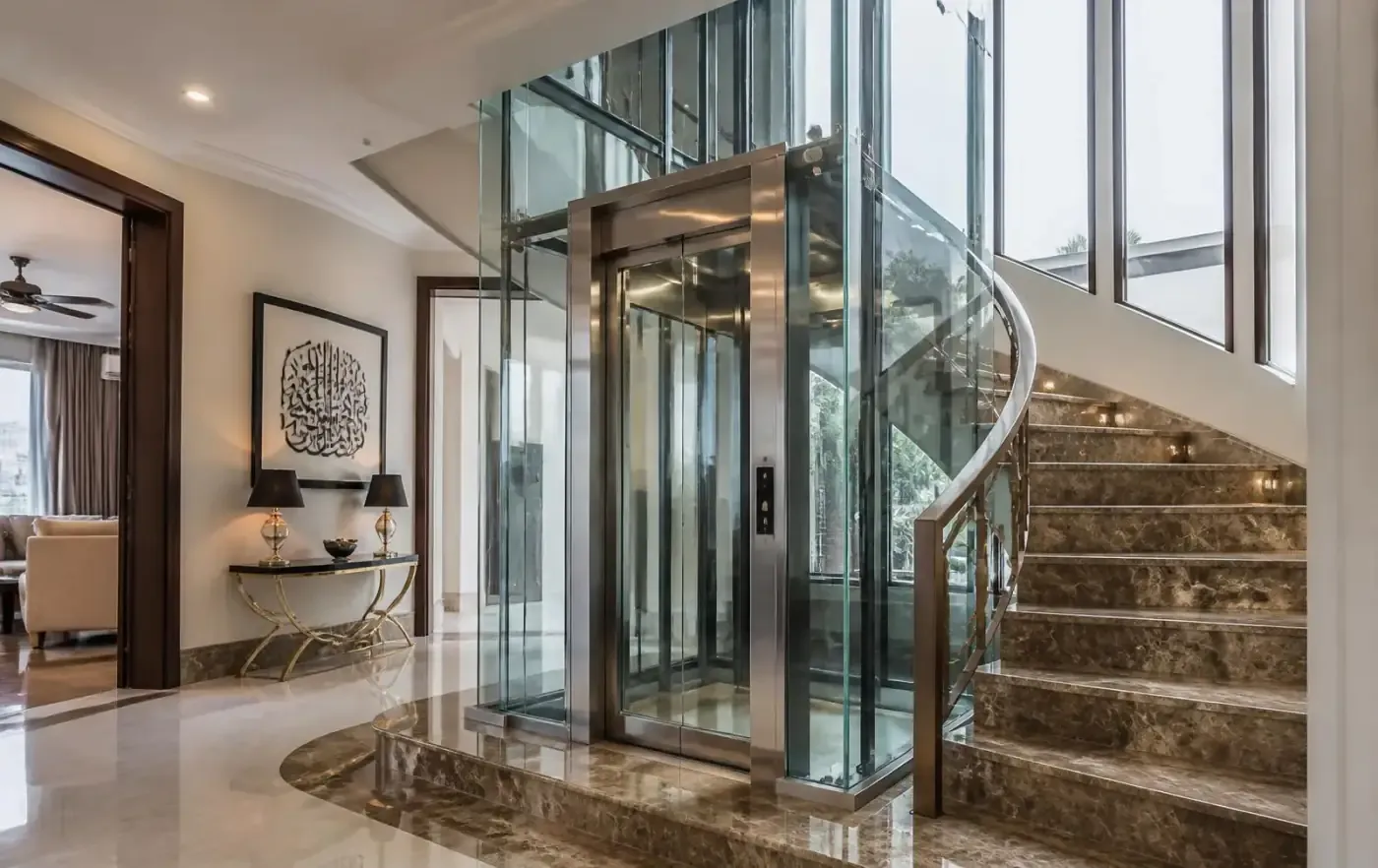
Elevator Repair in Pakistan: Common Faults & Fixes
Diagnose and fix the elevator faults that occur most in Pakistan — entrapments during load-shedding, door failures, levelling errors, drive trips, noise and vibration — plus emergency response and repair cost bands.
First: what to do during an entrapment
If someone is trapped, keep talking to them through the intercom and reassure them that the car cannot fall — safety gear and ropes hold it. Do not attempt to force doors open or wind the car manually unless you are a trained lift engineer; manual release is a defined procedure with the main switch isolated and the brake released in controlled steps by competent persons. Call the maintenance provider's emergency line immediately. Under our AMC the target on-site response for entrapment or safety-critical faults is under 45 minutes in central Karachi, Lahore and Islamabad zones, 24 hours a day.
Fault 1 — Car stops between floors during load-shedding
Cause is almost always an ARD that is absent, undersized or has a dead battery bank, or a generator changeover the controller does not ride through. Fix: verify the ARD actually performs a rescue at load, measure battery terminal voltage and charger output, replace the bank on a two to three year cycle, and confirm the EN 81-28 emergency alarm shares the backed-up supply. If the building has a generator, time the changeover and adjust the controller's ride-through or add a UPS on the control circuit.
Fault 2 — Doors not closing, re-opening or jamming
Doors cause more callouts than any other subsystem. Work through: sill channel obstruction and dust, roller and hanger wear, belt or chain tension on the operator, door-lock (interlock) contact condition and alignment, safety-edge or light-curtain contamination and alignment, and door-operator parameters — closing force and time drift out after years. On Pakistani sites cement dust in sills and worn rollers account for most of it, so sill cleaning is a routine task rather than a repair.
Fault 3 — Car does not stop level with the landing
Levelling errors come from brake wear or maladjustment, encoder or shaft-learning drift, rope creep and stretch (especially in the first year), worn guide shoes, or drive deceleration parameters. Fix in that order: measure brake pad thickness and clearance and set to the manufacturer's figure, re-learn the shaft, check and equalise rope tension, replace guide-shoe liners, then retune deceleration. Do not compensate for a mechanical fault by re-tuning the drive — the error returns.
Fault 4 — Drive or controller trips and error codes
Before replacing electronics, prove the supply: phase balance, neutral integrity, earth resistance and the voltage range across a working day at the lift panel. Sustained under-voltage overheats VVVF drives and causes torque loss; spikes destroy power stages. Overheating from a dust-blocked heat sink or a shaft head above rated ambient produces the same symptom set. Read and record the controller's fault log — on Monarch NICE 3000+ and similar controllers the code plus the log sequence usually identifies whether the fault is supply, thermal, encoder, safety-circuit or brake related.
Fault 5 — Noise, vibration and poor ride quality
Check rail alignment and joint condition first, then guide-shoe or roller-guide wear, rope tension equalisation, sheave and bearing condition, brake drag, and car-sling isolation pads. A lift that always rode poorly usually has a rail alignment or shaft plumb problem from installation; a lift whose ride degraded has a wear problem. Record vibration by floor so the offending travel section is identified before parts are ordered.
Fault 6 — Safety-circuit faults and nuisance shutdowns
A lift that shuts down and resets sporadically is usually reporting a genuine intermittent safety-circuit break: a door-lock contact, a pit or car-top inspection switch, a governor switch, a slack-rope or overload device, or a travelling-cable termination. Never bridge a safety contact to keep a lift running — find the break. In Pakistani buildings, water in the pit and corroded terminations are frequent causes and are seasonal, appearing every monsoon until the water path is closed.
Repair versus modernization, and cost bands
Component repairs — door operator overhaul, ARD battery bank, guide-shoe liners, brake relining, fixture replacement — are routine and modest. Controller or drive replacement, machine replacement or full re-roping are capital items. As a rule of thumb, if the equipment is roughly 15–20 years old, spares for its controller are scarce and faults recur monthly, a modernization package (controller, drive, door operator, fixtures) delivers lower five-year cost and brings the installation in line with current EN 81-20/50 expectations. Any quotation follows a site survey, since brand, age and spare availability dominate the price.
What to have ready when you call for repair
Speed the visit up by noting: building and city, elevator type and approximate capacity, brand and controller model if visible, number of stops, what the car is doing (stuck, drifting, door fault, not responding), any code shown on the controller or car panel, whether anyone is trapped, and when the fault started or whether it is intermittent. Our service request form collects exactly these fields so the engineer arrives with the likely parts instead of returning a second time.
Frequently asked questions
- What should I do if someone is trapped in a lift in Pakistan?
- Reassure the passenger through the intercom, do not force doors or move the car yourself, and call the maintenance provider's 24/7 emergency line. Manual release requires trained engineers with the supply isolated. Under AMC our target on-site response for entrapment is under 45 minutes in central Karachi, Lahore and Islamabad zones.
- Why does my elevator stop between floors during load-shedding?
- Because there is no working Automatic Rescue Device, the battery bank is exhausted or undersized, or the controller does not ride through generator changeover. Test ARD rescue at load, measure battery and charger condition, and plan battery replacement every two to three years.
- Why do elevator doors keep failing?
- Most door faults trace to dust and debris in the sill channel, worn rollers or hangers, slack operator belt or chain, dirty or misaligned safety edge and light curtain, or drifted closing force and timing parameters. Regular sill cleaning prevents the majority of them in Pakistani buildings.
- Why does the lift stop above or below floor level?
- Usually brake wear or maladjustment, shaft-learning or encoder drift, rope stretch, or worn guide shoes. Correct the mechanical cause and re-learn the shaft rather than compensating with drive deceleration settings, otherwise the error returns.
- Is it cheaper to repair or modernize an old elevator?
- Component repairs are cheaper while spares are available and faults are occasional. Once the equipment is roughly 15–20 years old, controller spares are scarce and faults recur monthly, a modernization package usually costs less over five years and restores compliance with current EN 81-20/50 expectations.
- #ElevatorRepairPakistan
- #LiftRepairKarachi
- #ElevatorRepairLahore
- #EmergencyLiftServiceIslamabad
- #ElevatorTroubleshooting
- #EN8120Compliance
Talk to a Liftech engineer
Have a project in Pakistan? Our engineers can advise on specification, modernization or AMC.
Contact us