Rising Skyscrapers and Smart Mobility: The Boom of Elevator Projects in Saudi Arabia
Saudi Vision 2030, NEOM and the Riyadh Metro are driving record demand for high-speed elevators and escalators. A technical and market review of the Saudi Arabia elevator market, its projects, technologies and outlook.
A skyline changing at unprecedented pace
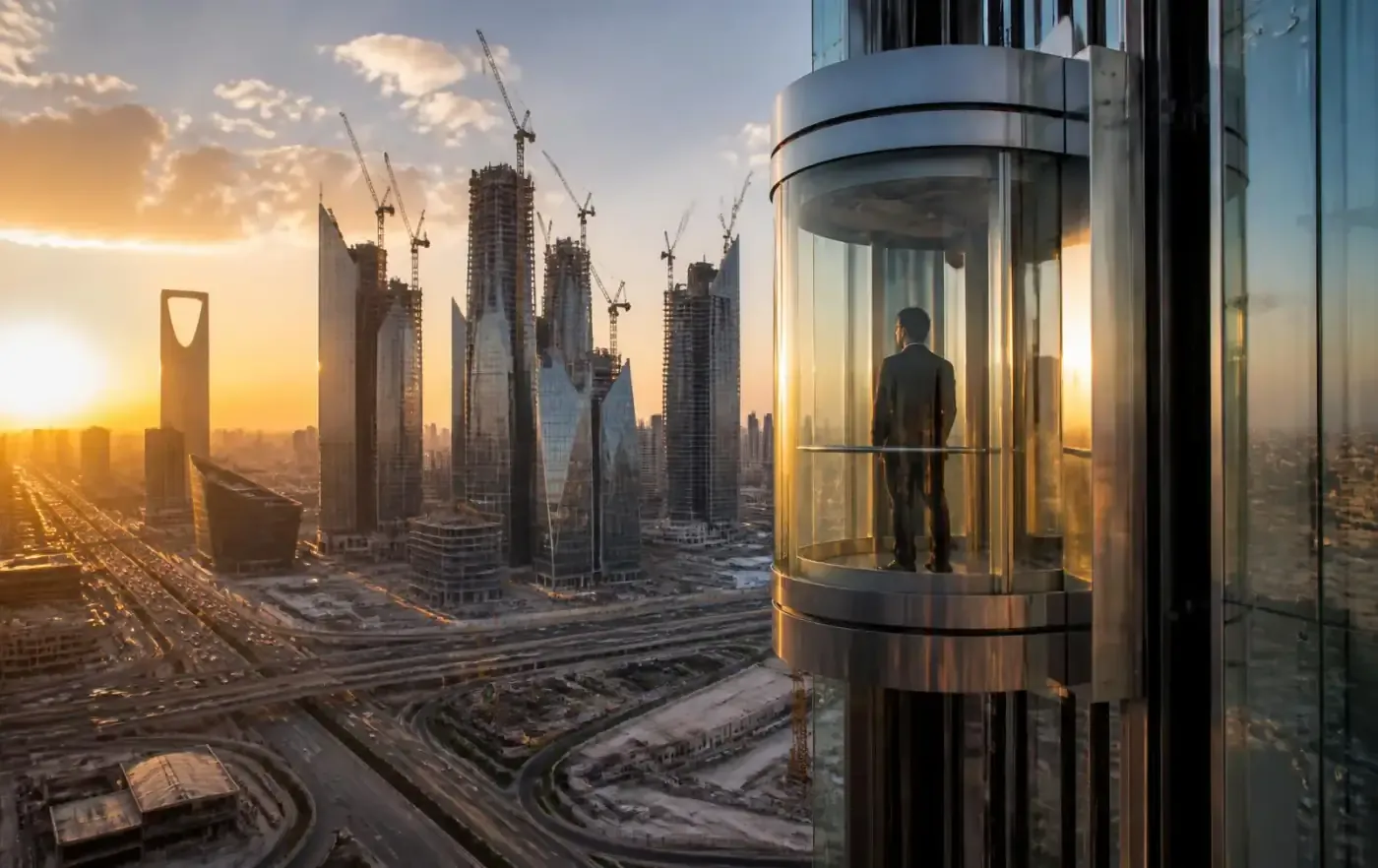
The skyline of Saudi Arabia is changing at an unprecedented pace. Driven by the ambitious goals of Saudi Vision 2030, the Kingdom has transformed into one of the most active construction and infrastructure hubs in the world. From mega-cities like NEOM and the Riyadh Metro to sprawling luxury hospitality and residential developments, the nation's growth is shifting upward. With this vertical expansion comes an extraordinary surge in demand for advanced vertical transportation systems. Elevators are no longer just a functional utility — they are core components of smart architectural design, energy efficiency and urban accessibility across the Kingdom.
Driving forces behind Saudi Arabia's elevator market
Saudi Vision 2030 construction: initiatives such as NEOM, The Red Sea Project and Qiddiya require cutting-edge engineering, smart elevators and sustainable infrastructure. Urbanization in Riyadh and Jeddah: major urban centres account for over 80% of the country's elevator demand as population density increases and housing shifts toward high-rise apartment complexes. Tourism and global events: mega-events including the 2030 World Expo in Riyadh and the 2034 FIFA World Cup are accelerating development of hotels, airports and commercial centres, amplifying the need for high-speed, high-capacity passenger elevators.
Major recent projects and industry milestones
The Avenues – Riyadh: Schindler Olayan secured a large contract to supply over 130 advanced elevators and 150 escalators for this sprawling commercial and leisure development. King Fahd International Airport modernization: KONE undertook major modernization contracts to upgrade and install new energy-efficient elevators and escalators to handle millions of annual travellers, aligning with the Kingdom's aviation targets. High-rise, high-speed implementations: manufacturers are deploying high-speed traction elevators in the 3.0–3.5 m/s band equipped with Destination Control Systems (DCS) to manage heavy passenger traffic in skyscraper hubs, with leading suppliers driving high-rise KONE and Schindler projects across major urban zones.
Technologies shaping Saudi vertical mobility
IoT and real-time diagnostics: predictive maintenance powered by connected controllers keeps downtime minimal in high-traffic commercial and transit zones. Destination Control Systems: smart algorithms group passengers heading to similar floors, cutting wait times and energy consumption. Eco-friendly, lightweight suspension: carbon-fibre core belts let cars travel higher with significantly reduced energy footprints and lower moving mass. Compliance with the Saudi Building Code: strict alignment with SBC requirements — including SBC 1101 fire-safety provisions and accessibility standards for people of determination — ensures every installation meets world-class safety criteria alongside EN 81-20/50 and EN 115 practice.
Future outlook: modernization is the second wave
The market for elevators and escalators in Saudi Arabia is projected to approach USD 2 billion, reflecting a robust compound annual growth rate. Beyond new installations, modernization and retrofitting projects for aging infrastructure in Riyadh, Jeddah, Mecca and Madinah are creating a secondary wave of opportunity — controller and drive replacement, door-system upgrades, DCS retrofits and EN 81-80 safety upgrades on lifts installed decades ago. As Saudi Arabia continues to build the cities of tomorrow, vertical transportation will remain a vital pillar of its modern architecture.
How Liftech reads this market
Liftech Global Elevators & Escalators works on and provides products, spare parts and modernization components for the same brand families being deployed across the Gulf — traction machines, VVVF drives, controllers, door operators and safety gear. For clients specifying projects in Pakistan or comparing Gulf benchmarks, our engineers can advise on speed and capacity selection, traffic analysis, DCS suitability and code compliance before tender.
Frequently asked questions
- What is driving the elevator market growth in Saudi Arabia?
- Growth is primarily driven by Saudi Vision 2030 mega-projects, rapid urbanization in hubs like Riyadh and Jeddah, and upcoming global events that require advanced high-rise infrastructure.
- Which cities have the highest demand for elevators in Saudi Arabia?
- Riyadh and Jeddah lead demand due to major commercial, residential and transit developments, followed by expanding infrastructure in Mecca, Madinah and the NEOM region.
- Which elevator technologies are specified for Saudi high-rises?
- High-speed traction elevators of 3.0–3.5 m/s with gearless PMS machines, Destination Control Systems, IoT-based predictive maintenance, regenerative drives and lightweight carbon-fibre-core suspension belts.
- #SaudiVision2030
- #ElevatorProjects
- #SmartCities
- #RiyadhConstruction
- #VerticalTransportation
- #NEOM
- #BuildingTechnology
Talk to a Liftech engineer
Have a project in Riyadh? Our engineers can advise on specification, modernization or AMC.
Contact us