
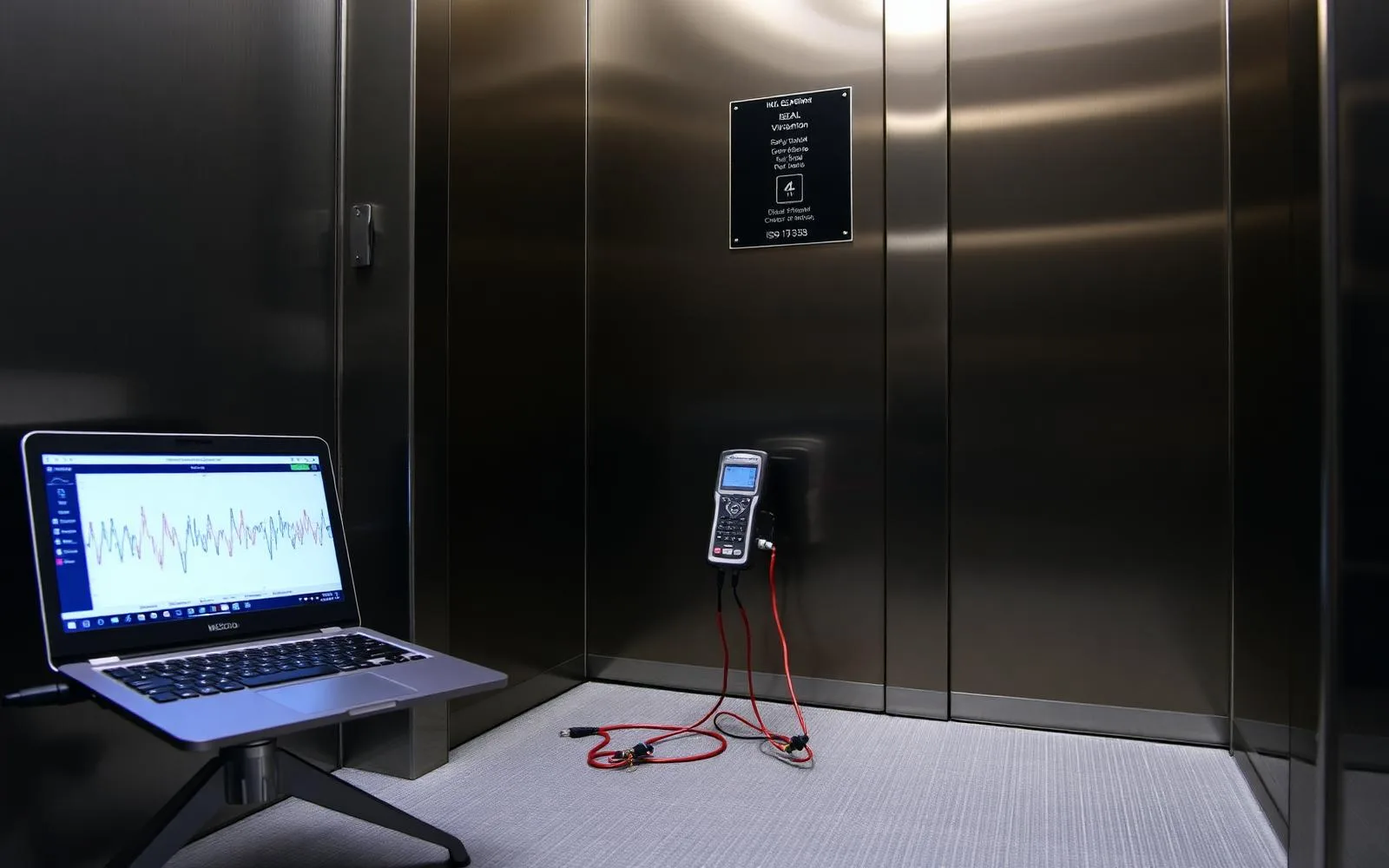
Elevator Ride Quality: Measuring A95 Vibration per ISO 18738-1
How Liftech quantifies ride quality on new and modernized elevators — vibration limits, sound, leveling and jerk.
What ISO 18738-1 defines
ISO 18738-1 sets the measurement method and reporting format for elevator ride quality: peak-to-peak acceleration, A95 (95th percentile) horizontal and vertical vibration in mg, jerk in m/s³, cabin sound in dB(A), and leveling accuracy in mm. Measurements are taken with a certified 3-axis accelerometer placed on the cabin floor centre.
Why A95 matters more than peak
Peak acceleration captures single spikes (a door slam, a controller adjustment); A95 captures what 95% of passengers actually feel during the trip. Grade-A commercial towers now specify A95 ≤15 mg horizontal and ≤20 mg vertical, ≤55 dB(A) cabin sound at rated speed, ±3 mm leveling and ≤1.4 m/s³ jerk.
How Liftech tunes for it
Rail plumb ±0.5 mm and DBG within ±1 mm; guide-shoe roller pressure setting; VVVF S-curve profile with acceleration ≤1.0 m/s² and jerk ≤1.4 m/s³; motor pre-torque from load-weighing; brake sequencing to eliminate roll-back. Quarterly A95 report is included in every Liftech AMC.
Talk to a Liftech engineer
Have a project in Pakistan? Our engineers can advise on specification, modernization or AMC.
Contact us