
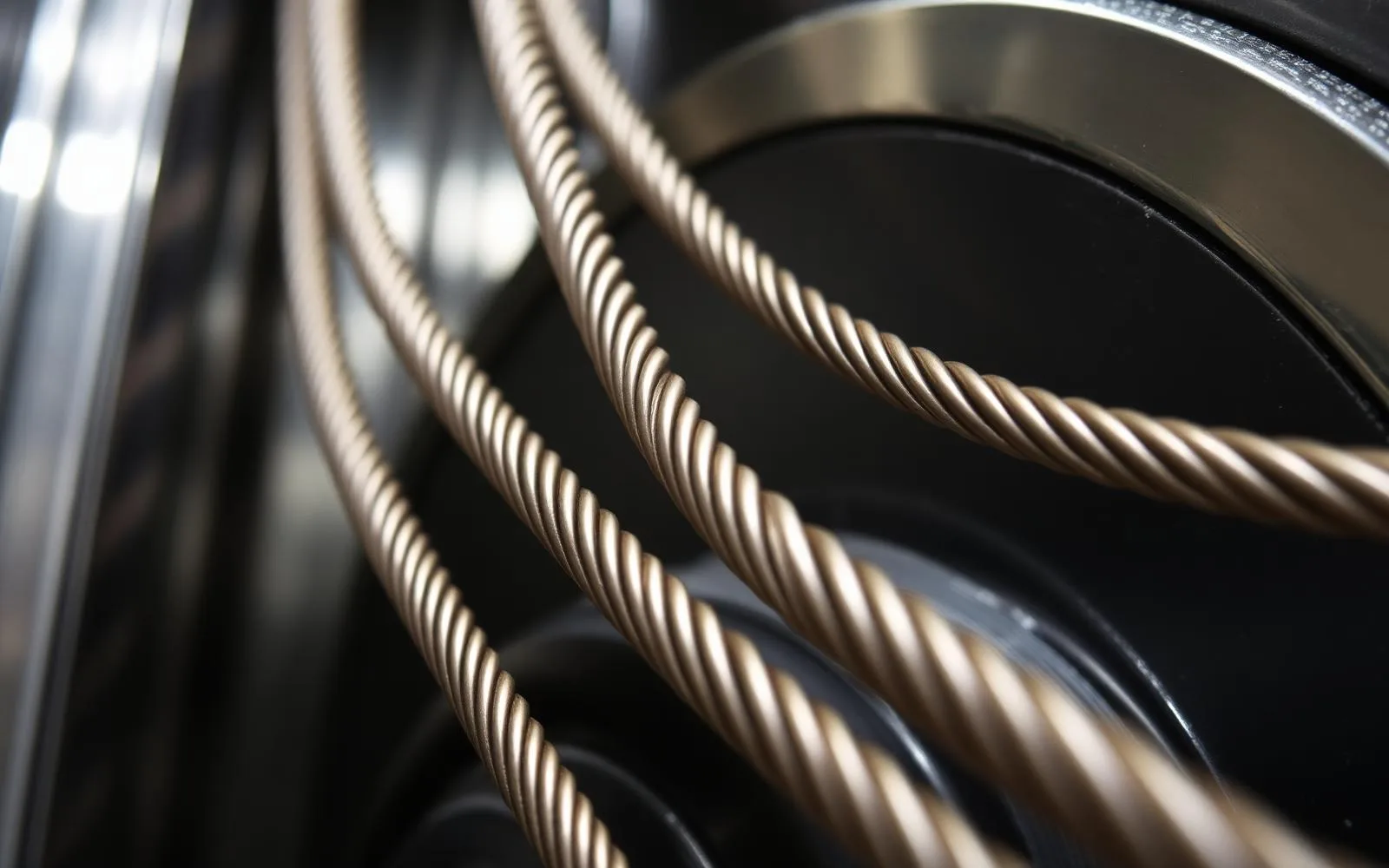
Elevator Rope Inspection: EN 12385-5 & EN 81-20 Discard Criteria
Broken-wire count, diameter reduction, corrosion and lay length — how Liftech decides when steel wire ropes must be replaced.
What the standard says
EN 12385-5 (design and inspection of stranded ropes) and EN 81-20 §5.5.2.2 set discard criteria for elevator ropes: broken wire count per lay length (typical limit 24 broken wires in 6d for 8×19 ordinary lay), diameter reduction ≥6% of nominal, severe corrosion, crown-wire wear ≥40% or any sign of rope-core damage.
Why ropes are replaced as a set
Elevator ropes work as a matched group — replacing a single rope leaves uneven tension across the traction sheave, causing groove wear, sliding and reduced traction on emergency stops. Always replace the full set of 4–6 ropes together, and re-equalize tension across the set at 24 hours and 30 days after installation.
How Liftech inspects and documents
Every AMC visit: visual scan for corrosion, kinks and crown wear. Every 6 months (or annually for low-traffic): full broken-wire count per lay length with magnifier at the sheave zone (highest fatigue), diameter measurement with calliper at 3 points, rope-core condition on inspection ports. All findings are recorded on the AMC log with rope serial and next inspection due date.
Talk to a Liftech engineer
Have a project in Pakistan? Our engineers can advise on specification, modernization or AMC.
Contact us