
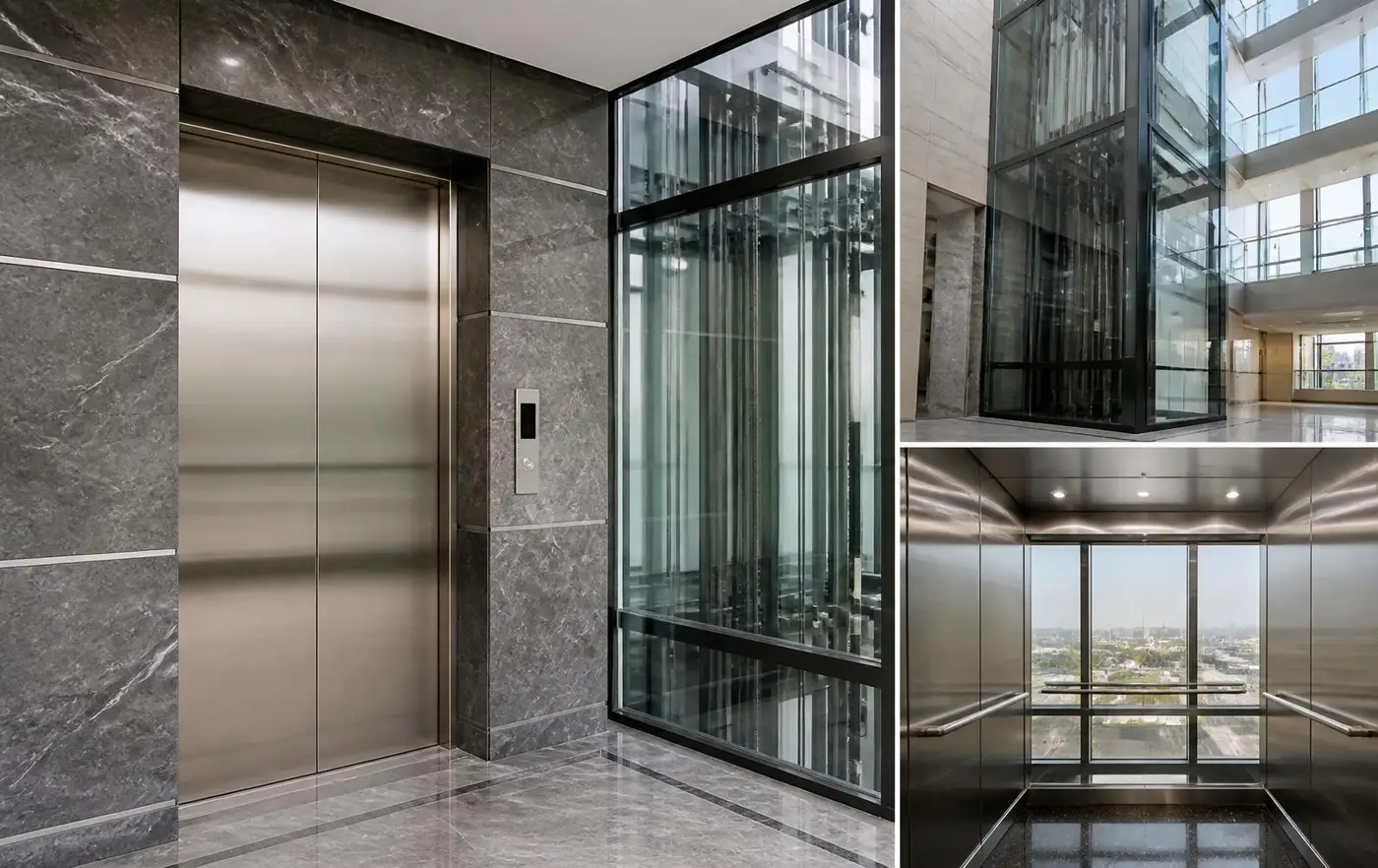
Types of Elevators in Pakistan: Complete Guide to Lift Systems
Explore the major types of elevators in Pakistan, including MRL, MR, traction, hydraulic, passenger, hospital, cargo, home, villa, glass, car and platform lifts, and learn which lift suits each building.
Types of elevators in Pakistan: an engineering overview
Elevators, commonly called lifts in Pakistan, are an essential part of modern residential, commercial, healthcare, industrial and high-rise buildings. The right elevator depends on several engineering factors, including building height, number of floors, passenger traffic, shaft dimensions, capacity, speed, available machine-room space, duty cycle, architectural requirements and budget. There is no single elevator that is best for every building. An MRL elevator can be an excellent solution where a separate machine room is undesirable, while a conventional MR traction elevator may be preferable for certain high-traffic or heavy-duty applications. A hydraulic elevator can be useful for specific low-rise applications, whereas cargo and freight elevators are designed primarily for transporting goods rather than passengers. This guide explains the major types of elevators in Pakistan, how they work, where they are used and how to select an appropriate lift system for Lahore, Karachi, Islamabad, Rawalpindi, Multan, Faisalabad, Peshawar, Quetta, Gujranwala, Bahawalpur and other cities.
What are the main types of elevators in Pakistan?
The major elevator categories used or specified for buildings in Pakistan are passenger elevators, MRL elevators, machine room (MR) elevators, geared traction elevators, gearless traction elevators, hydraulic elevators, home elevators, villa elevators, hospital and bed elevators, cargo elevators, freight elevators, dumbwaiters, glass elevators, panoramic elevators, capsule elevators, car elevators, platform lifts and stair lifts. These categories are not all mutually exclusive: a passenger elevator describes the application, while MRL describes the machine-room configuration. A passenger lift can therefore be an MRL traction elevator, and a hospital lift can also use a traction system.
1. Passenger elevators
Passenger elevators are the most common type installed in residential and commercial buildings. They are designed primarily for transporting people between floors and are available in different capacities, speeds, cabin configurations and door arrangements. Typical applications include apartment buildings, offices, shopping malls, hotels, schools and universities, hospitals, commercial plazas, government buildings and residential towers. Passenger elevators in Pakistan commonly use electric traction technology with VVVF control. Depending on the specification they can include automatic doors, a VVVF drive, emergency battery lowering or rescue system, automatic rescue device, overload protection, door safety sensors, emergency alarm, emergency lighting, intercom or communication system, floor indicators, Braille buttons, fire-service operation and energy-efficient LED lighting. The required capacity and speed should be determined from the building's traffic requirements rather than selected only on the basis of cabin size.
2. MRL elevators (machine room less)
MRL stands for Machine Room Less. An MRL elevator is a traction elevator designed without a conventional separate machine room above the shaft; the traction machine and associated equipment are arranged within the shaft or designated shaft-head area according to the elevator design. Advantages include no conventional separate machine room, efficient use of building space, suitability for many residential and commercial buildings, modern compact machine arrangements, reduced architectural requirements, good energy efficiency when properly specified, and suitability for new construction and selected modernization projects. MRL elevators can be considered for apartment buildings, commercial plazas, offices, hotels, educational buildings, hospitals where the appropriate specification is selected, low- and medium-rise buildings and modern residential developments. However, MRL does not automatically mean an elevator is better than an MR elevator: the correct selection depends on the building, traffic requirements, shaft geometry, maintenance strategy, equipment specification and local installation conditions.
3. Machine room (MR) elevators
A machine room elevator is a traction elevator in which the main elevator machine is installed in a dedicated machine room, normally located above or adjacent to the shaft depending on the building design. The machine room provides dedicated access and working space for elevator equipment. Advantages include dedicated equipment space, convenient access to major machinery in many designs, suitability for heavy-duty applications, flexible equipment arrangements and the ability to accommodate various traction machine configurations. MR systems are commonly considered for buildings where sufficient architectural space is available for a machine room.
4. Geared traction elevators
A geared traction elevator uses an electric motor connected to a gearbox. The gearbox transfers motor rotation to the traction sheave, and the sheave moves the hoist ropes connected to the elevator car and counterweight. Geared traction systems can be used where specific speed, capacity and duty requirements make them appropriate, typically in commercial buildings, medium-rise buildings, industrial applications, heavy-duty elevator systems and older installations or modernization projects. Suitability depends on the specific elevator design, required speed, capacity, duty cycle and energy requirements.
5. Gearless traction elevators
A gearless traction elevator uses a motor directly connected to the traction sheave rather than a reduction gearbox. Gearless machines are particularly associated with higher-performance applications and can provide high efficiency, smooth operation, high-speed capability, strong performance for demanding duty and reduced mechanical transmission losses. Gearless traction systems are commonly considered for high-rise and high-performance elevator installations.
6. Hydraulic elevators
A hydraulic elevator uses hydraulic pressure to move the car: a pump forces hydraulic fluid into a cylinder, producing movement of the piston and elevator platform or car. Hydraulic elevators can be useful for selected low-rise applications where their characteristics are advantageous — they suit certain low-rise buildings, can handle substantial loads, allow flexible equipment arrangement and do not require a conventional traction counterweight arrangement. Limitations may include lower energy efficiency in some operating conditions, hydraulic equipment requirements, potential heat generation, more specialized maintenance requirements and speed limitations compared with many modern traction systems. Hydraulic elevators should therefore not automatically be considered the default choice simply because a building is low-rise.
7. Home elevators
A home elevator is designed specifically for residential use and can provide convenient vertical transportation in houses, luxury residences, multi-level homes, private residences, renovated buildings and accessible homes. Depending on the project, home elevators may use traction, screw, hydraulic or other specialized technologies. Before selecting a home lift, consider available shaft space, number of floors, required capacity, travel height, door configuration, power supply, pit requirements, headroom, structural requirements, emergency operation, maintenance access and safety requirements. A compact home elevator may be appropriate for a house, but the smallest available lift is not necessarily the safest or most practical solution.
8. Villa elevators
Villa elevators are specialized residential elevators designed for premium houses and villas, often combining engineering functionality with architectural design. Popular options include stainless-steel cabins, glass doors, panoramic cabins, customized ceilings, decorative lighting, luxury finishes, compact cabin arrangements and automatic doors. Villa elevators are increasingly used in high-end residential projects where accessibility, convenience and architectural appearance are important.
9. Hospital and bed elevators
Hospital elevators, also known as bed lifts or stretcher elevators, are designed for hospitals and healthcare facilities. They generally require larger cabins than standard passenger elevators because they may need to accommodate hospital beds, patients, medical staff, wheelchairs and medical equipment. Specifications may include large cabin dimensions, wide automatic doors, smooth acceleration and deceleration, accurate floor levelling, high reliability, durable and easy-to-clean cabin finishes, emergency communication, fire-service provisions and appropriate infection-control considerations. Hospital elevators should be designed around the healthcare facility's operational requirements rather than simply using a larger passenger elevator.
10. Cargo elevators
A cargo elevator is designed primarily for transporting goods, equipment and materials, and is commonly found in warehouses, factories, industrial buildings, shopping centres, commercial buildings, distribution facilities and workshops. Cargo elevators require robust construction because their operating environment can be considerably more demanding than that of a conventional passenger elevator.
11. Freight elevators
The terms freight elevator and cargo elevator are often used interchangeably, although the exact classification can vary by manufacturer, project specification and applicable code. Freight elevators are intended primarily for transporting goods and materials and may feature high load capacity, heavy-duty doors, reinforced cabin construction, durable flooring, industrial-grade protection and robust suspension and drive components. Passenger transportation should not be assumed to be permitted in a freight-only elevator; the elevator must be specified and certified for its intended use.
12. Dumbwaiters
A dumbwaiter is a small lifting system designed to transport goods rather than people between floors. It is commonly used in restaurants, hotels, hospitals, offices, libraries, houses and commercial kitchens for food, dishes, documents, small equipment, laundry and supplies. Dumbwaiters are particularly useful where a full-size passenger or service elevator would be unnecessary.
13. Glass elevators
A glass elevator uses glass extensively in the cabin, doors or shaft enclosure and is often selected for architectural and aesthetic reasons. It can create improved visual connection, a premium architectural appearance, greater transparency, panoramic views and landmark-building appeal. Glass elevators are commonly considered for shopping malls, hotels, luxury residences, corporate buildings, atriums, museums and commercial developments. Safety-rated laminated or appropriately specified glass systems should be used according to the elevator design and applicable requirements.
14. Panoramic elevators
A panoramic elevator is designed to provide passengers with an external view while travelling between floors, with the cabin incorporating glass walls or doors depending on the architectural design. Panoramic elevators are popular in hotels, shopping malls, commercial centres, resorts, high-end residences and public buildings, where they can become an architectural feature rather than simply a transportation system.
15. Capsule elevators
A capsule elevator is a visually distinctive elevator with a rounded or specially designed cabin. The term is generally associated with architectural design rather than a separate fundamental lifting technology — a capsule elevator may use a conventional traction system while having a specialized cabin design. They are often used where the elevator is intended to become a prominent architectural element.
16. Car elevators
A car elevator is designed to transport vehicles vertically between floors and can be used in automated parking facilities, multi-level parking buildings, commercial developments, luxury residences, vehicle showrooms and space-constrained urban developments. Car elevators require substantially different engineering considerations from passenger elevators: vehicle dimensions, vehicle weight, platform size, door dimensions, loading arrangement, traffic frequency, safety systems, structural loads, pit and headroom, and drainage and environmental conditions.
17. Platform lifts
A platform lift is a vertical lifting system in which the user travels on a platform rather than inside a conventional enclosed elevator cabin. Platform lifts can be used for accessibility applications where a person using a wheelchair or mobility device needs to move between levels, and may be suitable for public buildings, schools, offices, residential buildings, commercial premises and accessibility upgrades. The correct platform lift should be selected according to the building's accessibility requirements, travel height, load and applicable safety requirements.
18. Stair lifts
A stair lift moves a person along a staircase using a powered seat or platform attached to a rail system, and can be particularly useful where installing a conventional vertical elevator is impractical. Stair lifts are commonly considered for private houses, existing buildings, accessibility improvements and buildings with limited shaft space. The staircase geometry and the user's mobility requirements must be considered before installation.
Elevator technologies vs elevator applications
Different terms describe different aspects of an elevator. Application: passenger, hospital, cargo, car. Machine-room configuration: MR, MRL. Drive technology: traction, hydraulic. Traction machine: geared, gearless. Architectural design: glass, panoramic, capsule. Residential application: home, villa. Accessibility: platform lift, stair lift. Small goods transportation: dumbwaiter. Saying that an elevator is simply an MRL elevator therefore does not completely describe it. For example, MRL + gearless traction + passenger elevator describes the machine-room configuration (MRL), machine type (gearless), drive principle (traction) and application (passenger transportation). This distinction is important when preparing an elevator specification for an architect, consultant, contractor or building owner.
MRL vs MR elevator: what is the difference?
The fundamental difference is the location and arrangement of the elevator machinery. An MRL elevator usually requires no separate conventional machine room and places the machine within or associated with the shaft arrangement, making it more space-efficient but requiring carefully designed shaft access for maintenance. An MR elevator requires a dedicated machine room with dedicated access, needs additional architectural space, and suits commercial, high-duty and various building types. Both offer high design flexibility depending on the system. MRL is not automatically superior to MR — the correct choice depends on the complete engineering design.
What is a traction elevator?
A traction elevator moves the car using hoisting ropes, a traction sheave and a counterweight or another appropriate suspension arrangement. The electric motor drives the traction system, causing the ropes to move and the car to travel vertically. Modern traction elevators frequently use VVVF drives, which control motor speed and help provide smoother acceleration, deceleration and levelling. Traction technology is widely used for passenger, commercial, residential, hospital, high-rise and cargo elevators.
Which type of elevator is best in Pakistan?
There is no universal best elevator for every building. The best elevator correctly matches the building's number of floors, floor-to-floor height, traffic demand, required capacity, required speed, shaft dimensions, pit depth, headroom, power availability, architectural requirements, building use, operating conditions, maintenance capability, budget and safety requirements. For a typical modern residential building, an appropriately specified MRL traction passenger elevator can be efficient where a separate machine room is undesirable. For high-traffic buildings, a properly engineered traction system — potentially gearless depending on speed, capacity and height — may be preferred. For hospitals, a dedicated bed elevator with suitable dimensions, controls and operational features should be considered. For factories and warehouses, a cargo or freight elevator designed for the required load and duty cycle is more appropriate than a standard passenger elevator. For houses and villas, a home or villa elevator provides a compact, architecturally integrated solution. For accessibility, a platform lift or stair lift may be appropriate where a conventional elevator is impractical.
How to choose an elevator for a building in Pakistan
A building owner should not compare suppliers only on price. A professional elevator assessment should consider building height (number of floors, number of stops, floor-to-floor height, total travel and required speed) — a six-floor commercial building and a twenty-floor residential tower require very different engineering. Capacity should be calculated from the number of occupants, building type, peak traffic, passenger flow and waiting-time requirements, not selected only from the available shaft size. The available shaft must be checked for width, depth, door opening, cabin dimensions, counterweight position, guide rails, machine arrangement, pit, headroom and structural supports, and a proper elevator GA drawing should be prepared before construction wherever possible. The project should also determine whether a conventional machine room can be accommodated; if not, an appropriately designed MRL elevator may be considered. Finally, traffic analysis may determine the number of elevators, capacity, speed, door width, door opening time and group control requirements — for larger buildings this should be performed rather than selecting an elevator based solely on floor count.
Elevator safety in Pakistan
Elevator safety should be treated as an engineering requirement, not a marketing feature. Depending on the system and applicable requirements, important safety provisions can include mechanical safety gear, overspeed governor, door interlocks, door safety protection, emergency alarm, emergency lighting, automatic rescue operation, overload protection, final limit switches, buffer systems, brake monitoring, emergency communication, fire-service operation where required, appropriate electrical protection, proper earthing and shaft access and inspection provisions. The exact safety system must be determined from the elevator design, applicable standards and project requirements.
Elevator maintenance in Pakistan
Selecting an elevator is only the beginning of its operational life. A proper maintenance program should cover door mechanisms, traction machine, brake system, guide rails, ropes, safety gear, governor, electrical control system, VVVF drive, door operator, landing equipment, cabin equipment and emergency systems. Building owners should also consider the availability of qualified technicians and replacement parts before selecting an elevator brand or system.
Elevator cost in Pakistan
The cost of an elevator in Pakistan cannot be determined accurately from capacity alone. The final project price can depend on elevator type, capacity, speed, number of floors and stops, shaft dimensions, cabin finishes, door type, machine type, control system, VVVF drive, safety equipment, installation requirements, civil works, electrical works, imported components, local manufacturing, customization and maintenance requirements. A professional quotation should therefore be prepared after reviewing the building drawings and site requirements.
Why professional elevator engineering matters
An elevator is not simply a cabin installed inside a shaft. A complete elevator system integrates mechanical engineering, electrical engineering, electronics, controls, structural requirements, architecture, safety and building services, and it must work correctly with the building structure and other building systems. At Liftech Global Elevators & Escalators Pakistan, elevator solutions are approached as an integrated vertical-transportation engineering requirement rather than simply a product purchase, considering site conditions, shaft geometry, elevator traffic, mechanical configuration, electrical requirements, control systems, cabin architecture, safety systems, installation, testing, commissioning and maintenance.
Liftech Global Elevators & Escalators Pakistan
Our engineering scope can include passenger elevators, MRL elevators, MR elevators, home elevators, villa elevators, hospital and bed elevators, cargo elevators, freight elevators, glass elevators, panoramic elevators, car elevators, dumbwaiters, platform lifts, escalators, moving walkways, elevator modernization, maintenance, installation, and consulting and engineering. Whether the requirement is a new elevator for a house, a passenger lift for a commercial plaza, a hospital bed lift, a cargo elevator for an industrial facility or a specialized architectural elevator, the system should be engineered according to the actual project requirements.
Conclusion
The types of elevators in Pakistan vary considerably in technology, configuration, capacity, application and architectural design. The most important categories include passenger elevators, MRL elevators, MR elevators, geared and gearless traction elevators, hydraulic elevators, home and villa elevators, hospital elevators, cargo and freight elevators, dumbwaiters, glass, panoramic and capsule elevators, car elevators, platform lifts and stair lifts. The right elevator is not necessarily the cheapest, largest or most technologically complex system — it is the one that provides the appropriate combination of safety, capacity, speed, reliability, efficiency, maintainability, architectural integration and lifecycle value for the building. Elevator selection should begin with an engineering assessment of the building rather than a simple comparison of elevator prices.
Frequently asked questions
- What are the types of elevators in Pakistan?
- The major types include passenger elevators, MRL elevators, MR elevators, geared and gearless traction elevators, hydraulic elevators, home elevators, villa elevators, hospital elevators, cargo elevators, freight elevators, dumbwaiters, glass elevators, panoramic elevators, capsule elevators, car elevators, platform lifts and stair lifts. The categories overlap because some terms describe the application while others describe the elevator technology.
- Which type of elevator is best in Pakistan?
- There is no single best elevator for every building. For many modern residential and commercial projects, a properly engineered MRL traction elevator can be an effective solution, while high-rise, high-traffic, hospital, industrial and specialized buildings may require different systems. The correct elevator should be selected according to building height, traffic, capacity, speed, shaft dimensions, duty cycle, safety requirements and budget.
- What is an MRL elevator?
- MRL means Machine Room Less. It is generally a traction elevator designed without a conventional separate machine room; the traction machine and associated equipment are arranged within the shaft or designated shaft-head area according to the elevator design.
- What is the difference between MR and MRL elevators?
- An MR elevator uses a dedicated machine room for the elevator machinery, while an MRL elevator is designed without a conventional separate machine room. MRL can save architectural space, while MR systems can provide convenient dedicated equipment access and flexibility for certain applications.
- What is a traction elevator?
- A traction elevator uses an electric motor, traction sheave, ropes and generally a counterweight to move the elevator car. Modern traction elevators commonly use VVVF motor control for smooth and efficient operation.
- What is a hydraulic elevator?
- A hydraulic elevator uses hydraulic pressure to move the car or platform. It can be suitable for selected low-rise applications, although its energy consumption, speed and hydraulic-system requirements need to be evaluated against traction alternatives.
- Which elevator is best for a house in Pakistan?
- For a house, the appropriate choice depends on the available shaft space, number of floors, travel height, required capacity, architectural design, power supply and budget. A properly specified home or villa elevator can be suitable, and compact traction or other residential elevator technologies may be considered depending on the project.
- Are MRL elevators suitable for commercial buildings?
- Yes, MRL elevators can be considered for commercial plazas, offices, hotels and educational buildings where the specification matches the traffic demand and shaft geometry. MRL is not automatically superior to MR, so the choice should be based on engineering requirements rather than the label alone.
- What is the difference between passenger and cargo elevators?
- A passenger elevator is primarily designed to transport people, while a cargo elevator is primarily designed to transport goods and materials. Cargo elevators generally require more robust construction and are selected according to load, duty cycle and industrial operating requirements.
- What is a dumbwaiter?
- A dumbwaiter is a small lifting system used to transport goods between floors. It is commonly used in restaurants, hotels, hospitals, offices, kitchens and residences.
- What is a hospital elevator?
- A hospital elevator, also called a bed or stretcher lift, is designed with a larger cabin and wider doors so it can accommodate hospital beds, patients, medical staff, wheelchairs and equipment, with smooth acceleration, accurate levelling, durable easy-to-clean finishes and emergency communication.
- What factors affect elevator price in Pakistan?
- Price depends on elevator type, capacity, speed, number of floors and stops, shaft dimensions, cabin finishes, door type, machine type, control system, VVVF drive, safety equipment, installation requirements, civil and electrical works, imported versus locally manufactured components, customization and maintenance requirements. A quotation should follow a review of the building drawings and site.
- #TypesOfElevatorsPakistan
- #MRLElevatorPakistan
- #TractionElevatorPakistan
- #HydraulicElevatorPakistan
- #HospitalElevatorPakistan
- #CargoElevatorPakistan
- #HomeElevatorPakistan
- #PlatformLiftPakistan
Talk to a Liftech engineer
Have a project in Pakistan? Our engineers can advise on specification, modernization or AMC.
Contact us